Gas-powered data centers: 126 GW of US plants planned
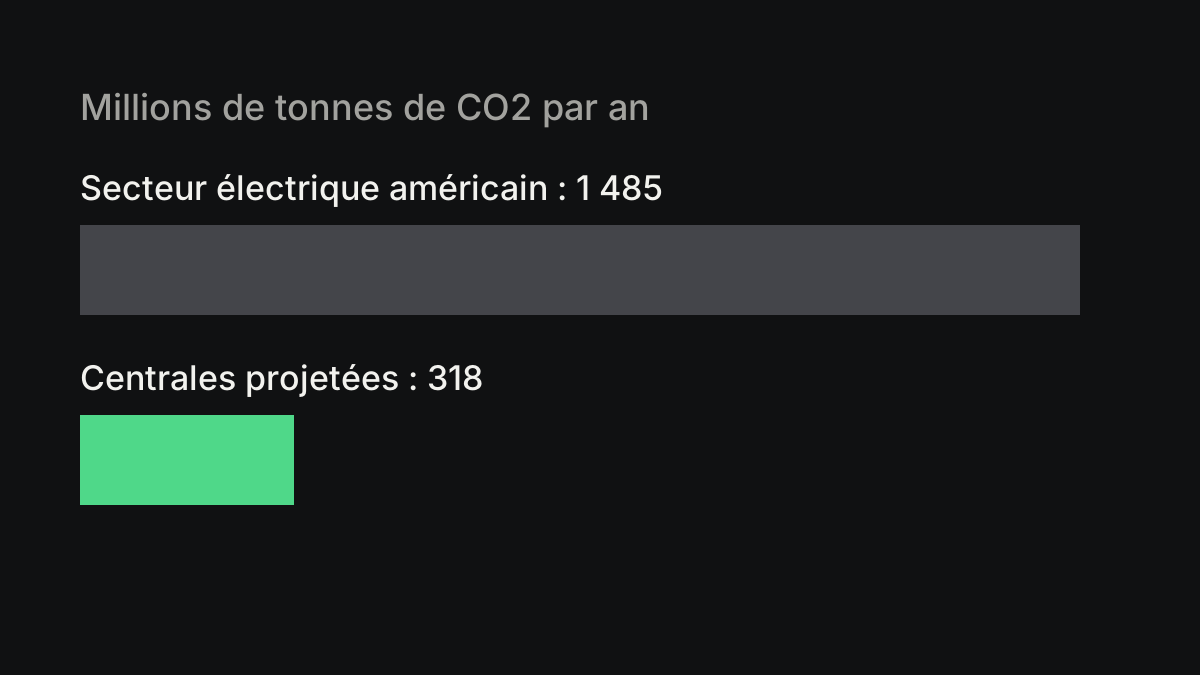
In the United States, data centers are planning gas plants built right on their sites: 126 GW of capacity in total, according to an analysis by BloombergNEF. If they run at the industry's standard rate, these plants would emit about 318 million metric tons of CO2 a year.
Key takeaways
- 99 gas plants are planned, for 126 GW of on-site capacity. The analysis, reported by Fortune in August 2026, comes from BloombergNEF.
- Estimated emissions come to about 318 million metric tons of CO2 a year, or about 20% of the US power sector's emissions.
- The projects are spread across 22 states, with more than a third of them in Texas.
- Not all of them will get built: the analysis also counts some long-shot projects.
What does a gigawatt actually mean?
A gigawatt (GW) equals 1,000 megawatts. That's roughly the output of one large nuclear reactor. So the 126 GW in the count add up to about a hundred and twenty reactors of that kind.
It's a measure of capacity, meaning the power these plants would deliver once they're built.
Why gas, and not the power grid?
Gas is the quick fix here. When the power grid can't hook up a site fast enough, the data center installs its own turbines. The article also notes that the US administration is making fossil fuel projects easier, and that some old fossil fuel sites have been brought back online.
In the IPO filing it submitted to the SEC in late October 2026, Anthropic writes that some of its planned data centers rely on on-site gas generation. The same document describes intense competition for access to electricity, and says this competition could push gas prices up.
Who's behind these projects?
The count includes projects backed by OpenAI and Anthropic, up-and-coming data center operators, cloud giants like Amazon and Microsoft, and investor groups. The article doesn't say what share belongs to Anthropic or OpenAI.
Two of these projects, Amazon's in Texas and Microsoft's through Chevron, could together top 10 GW and emit up to 45 million metric tons of CO2e a year.
Simple cycle or combined cycle: where the math falls short
The 318 million metric tons figure rests on two assumptions. The first is a plant utilization rate between 60% and 100%. The second is the fuel burn rate of a simple-cycle generator, a common type.
A simple-cycle plant pollutes more than a combined-cycle one. Developers prefer combined cycle, but long waits for turbine deliveries make that choice hard. So actual emissions will depend on how the plants are used and what equipment gets installed.
What does this mean for you?
A data center is a building you never see, but the electricity it uses runs through the same grids as yours. For a sense of scale, read Data centers: more CO2 than Denmark?.
Translated with the help of AI from our French article, which is prepared with AI from the sources, then reviewed and approved by Valentin Fouilloud before publication. How we work