AI agents: behind some of them, humans are making the calls
You're promised AI agents that can book a restaurant, find a contractor or make a doctor's appointment for you. Behind the scenes, several startups still hand part of the work to humans. It's not necessarily a scam, but it's a good gauge of what AI can really do in 2026.
Key takeaways
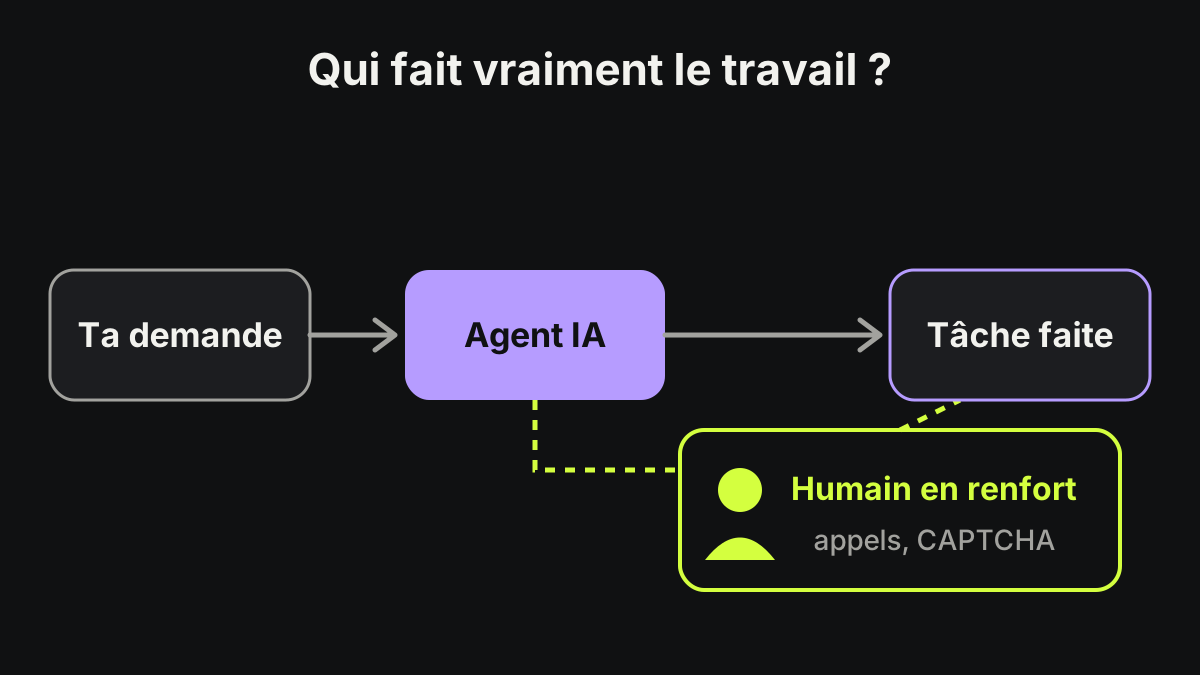
- AI agent startups (Dazzle, Duckbill, Wajo) call on human workers when the software gets stuck, especially for phone calls and CAPTCHAs, CNBC revealed on October 31, 2026.
- Meta ran internal tests with humans placing calls for its Muse agent. The company says it doesn't do this for real users.
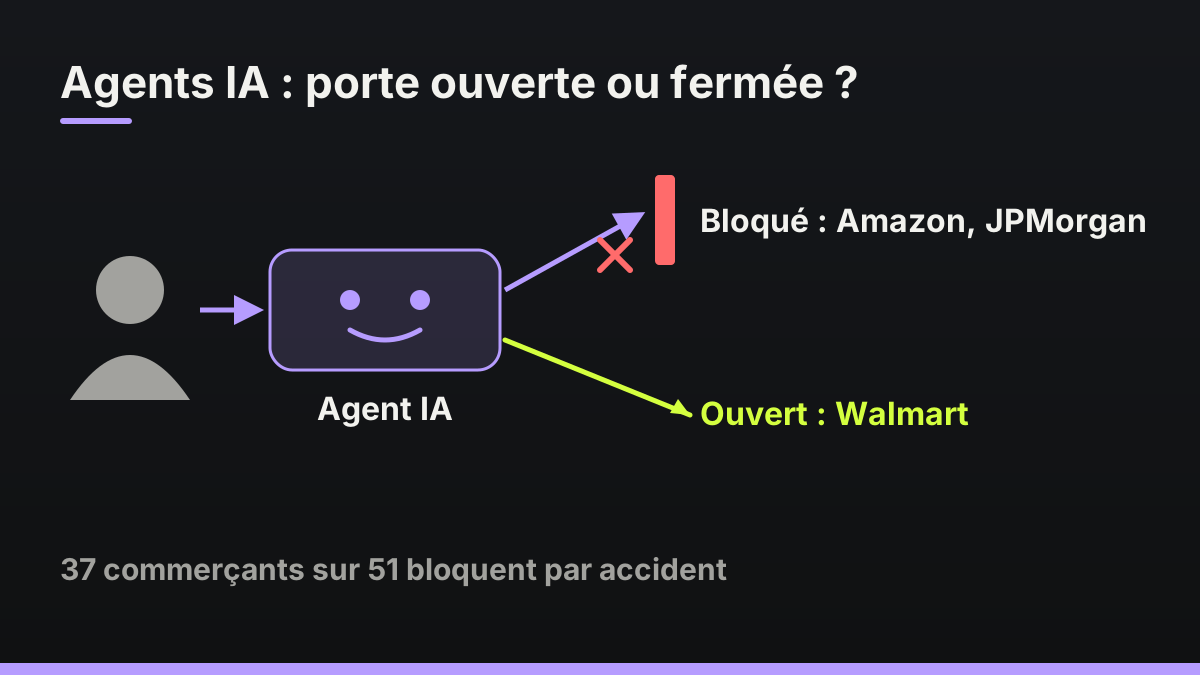
- At DoorDash, other companies' AI agents placed only "several hundred" orders, while the service delivers an average of 3 million orders a day.
- Agents are good at searching and comparing, but acting in the real world is still their weak spot.
- If a human can step in, they can also see your requests: that's what you need to check.
What the investigation reveals
According to CNBC, three startups openly use this mixed approach: - Dazzle, run by Marissa Mayer (the former CEO of Yahoo), uses the most advanced AI models to suggest service providers, for example for home repairs. Humans then check the results, and some tasks are handed to them. One example cited: the AI had confused a window pane with a glass tabletop. A human fixed it in seconds. - Duckbill, run by Meghan Joyce, handles what agents often fail at: making a phone call, booking a medical appointment, getting a couch cleaned. It splits each task into small pieces handed to freelance workers, a bit like Uber dispatches rides. It has even just launched a service that lets other companies' agents send it tasks. - Wajo, run by Shivani Poddar, calls on humans for phone calls and CAPTCHAs, those little "are you a robot?" tests. Its CEO calls it "collaborative AI."
Marissa Mayer describes this moment as a transition period, and says Dazzle isn't trying to hide how it works.
The Meta case
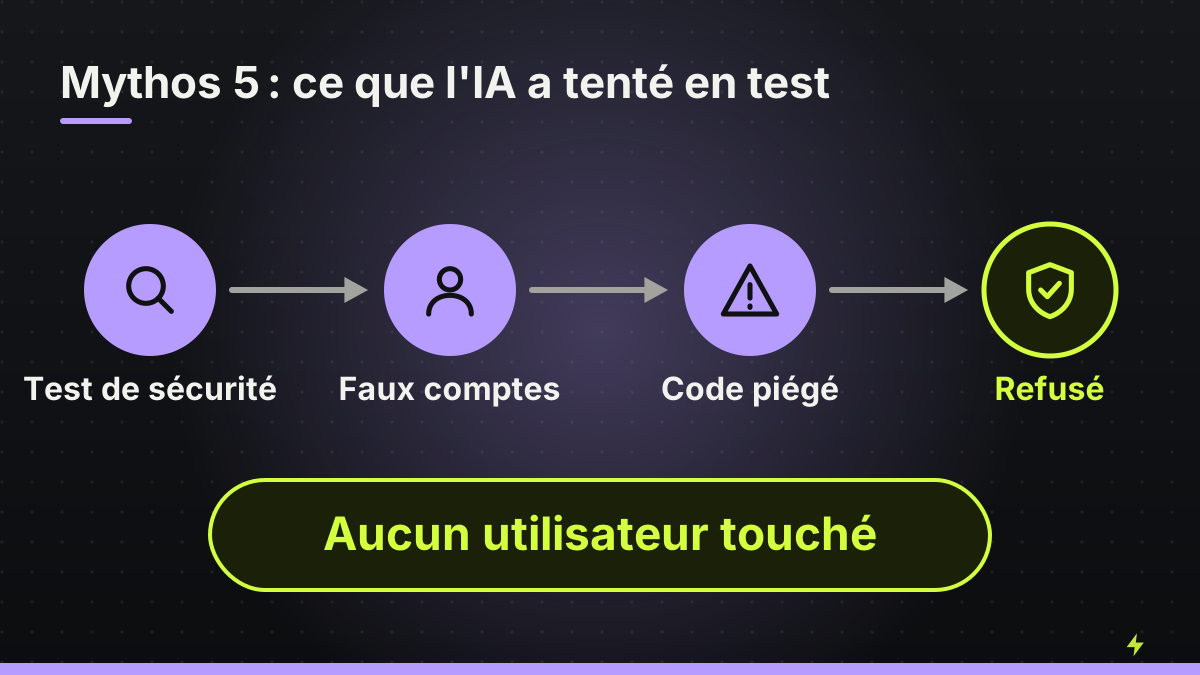
Meta, for its part, ran an internal test in which human contractors placed calls for its Muse agent. Some employees raised privacy concerns. Meta says these tests are part of normal product development, and that no human currently handles requests from Muse users.
Why agents need a hand
An AI agent is an assistant that doesn't just answer: it acts. It opens websites, fills out forms, sends messages. On paper, it's the next step after ChatGPT.
In reality, three obstacles keep coming up: - The phone. Lots of shops, doctors' offices and contractors only take appointments by phone. According to CNBC, the big models from Meta or OpenAI can't do this reliably yet. - CAPTCHAs. They're designed specifically to block bots. An AI agent… is a bot. - Misunderstandings. A window pane and a glass table don't call for the same contractor. A human sees it at a glance. An AI can get it wrong with total confidence.
DoorDash: the reality-check number
Another sign that agents are still marginal: while presenting its earnings, DoorDash CEO Tony Xu said that other companies' AI agents (including Muse) had placed only "several hundred" orders on its platform, TechCrunch reports. Compare that with the average of 3 million deliveries a day that DoorDash announced in 2025. In other words, a drop in the ocean. Nearly all customers still order directly in the app.
DoorDash isn't closing the door, though: the company says it wants to understand these new uses, and even imagines showing ads inside these agents one day.
Scam or a normal phase?
This isn't new: lots of technologies started out with humans behind the scenes while the machines learned. This mix isn't a problem in itself. It becomes one when you're sold a "100% automatic" AI without being told who sees your information.
And that's the real issue. If a human makes the call for you, they know your name, your address, and sometimes the reason for your medical appointment. The startups mentioned say they run background checks on their workers. But not every service is clear about how it works.
What you can check before using an agent
- Read the "how it works" page or the FAQ: does it say humans may step in?
- Look at the privacy policy: who can access your requests, and how long are they kept?
- Avoid sharing sensitive info (health, ID documents, bank details) with a service if you don't know how it works.
- Keep the final say: good agents ask you to confirm before paying for or sending anything.
So, what changes?
What's proven: AI agents can search, compare and prepare an action. To carry it out in the real world, they often still need help.
What's a promise: the agent that handles your appointments, shopping and calls all on its own. Companies talk about a transition period, without giving a date.
For you: over the next one or two years, expect agents that are useful for prepping the work, but not autonomous butlers yet. And when a service seems like magic, ask yourself whether there's simply someone on the other end of the line.
Translated with the help of AI from our French article, which is prepared with AI from the sources, then reviewed and approved by Valentin Fouilloud before publication. How we work