Meta Muse AI agent: why Amazon and banks are blocking it
An AI assistant that does your shopping, cancels your subscriptions and hunts for a better savings rate for you: that's the pitch for Muse, the agent Meta launched in the US in September 2026. The problem: big companies, from Amazon to the bank JPMorgan, are shutting the door on it. On November 1, CNBC took stock of this tug-of-war, which will shape how we shop online in the years ahead.
Key takeaways
- Muse is an "agent": it doesn't just answer, it takes actions on websites for you.
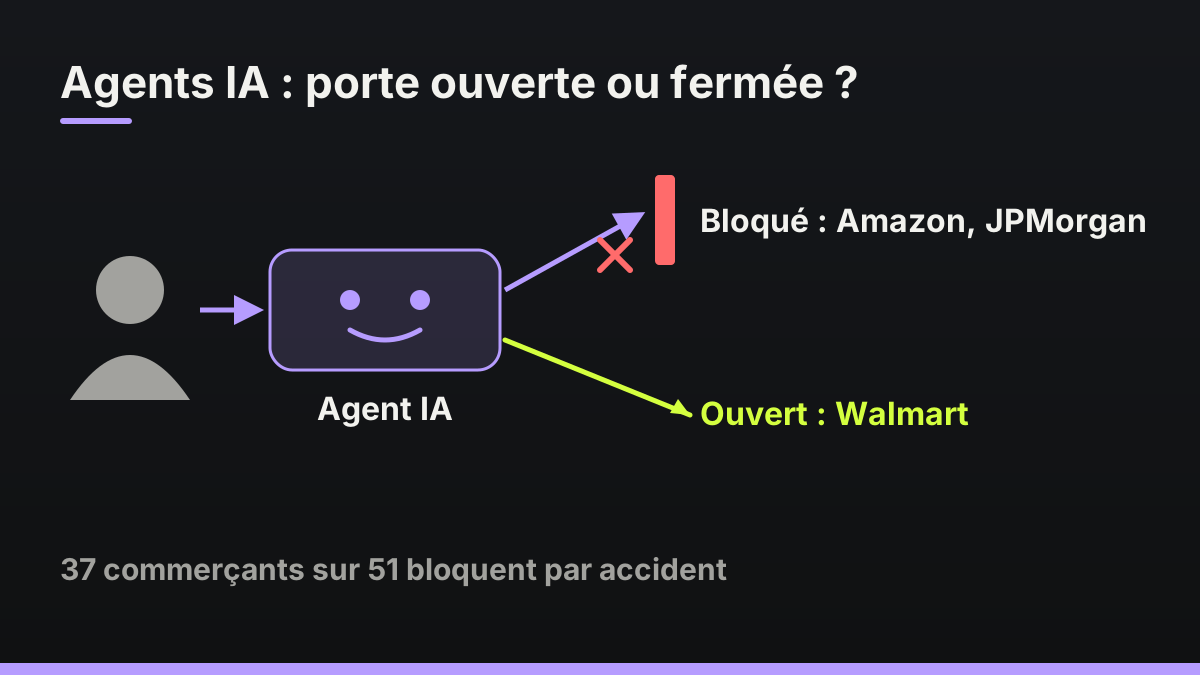
- Amazon, JPMorgan, Charles Schwab, Kohl's and Neiman Marcus block this kind of agent. Walmart, on the other hand, is opening its site to them.
- The reasons given: security, fraud, control over customer data and fear of losing revenue.
- According to an audit of 51 major US retailers, 37 block agents mostly by accident, with old anti-bot rules.
- Several experts think blocking won't work in the long run.
What is Muse?
Meta launched Muse on September 8, 2026, first in the US, through a dedicated app or WhatsApp. According to Fox Business, Meta presents it as able to send emails, book a trip, fill out forms, negotiate or bring down a bill.
Each Muse agent runs on its own "virtual machine," a simulated computer in the cloud. That's what lets it keep working even when you close the app. You choose which apps it can use, and it asks for your OK before certain actions, like sending an email or paying.
It's not the only agent of its kind: most of the big AI players are building one. But Muse, backed by Meta's muscle, has become the symbol of the debate.
Who's blocking, and how
According to CNBC, Amazon asked Meta to remove Amazon from Muse. The e-commerce giant says third-party shopping apps should "operate openly" and respect sites' decisions. The irony: Amazon has its own agent, "Buy for Me," which goes shopping on other brands' sites, and its CEO Andy Jassy wants Alexa to become the main shopping agent on Amazon.
On the banking side, JPMorgan CEO Jamie Dimon explained that, for now, his bank blocks outside AI agents that try to act on behalf of its retail customers, because of security risks. Charles Schwab, Kohl's and Neiman Marcus have taken similar steps. Walmart, by contrast, is opening its site to agents.
The biggest surprise comes from an audit of 51 major US retailers, cited by CNBC. Only 11 have a deliberate stance on agents, including 5 that explicitly restrict them. 37 block them mostly by accident, because of old rules designed against bots that scrape prices. And none offers an official way for a verified agent to complete a purchase.
Their reasons: not just the ones you'd think
- Fraud: a Visa executive calls the risks "very real." Fake agents could steal login credentials.
- Liability: if an agent buys the wrong thing or empties an account, who pays? The customer, the site, Meta?
- Data: an agent that does your shopping learns a huge amount about you. Retailers don't want that information going to a competitor.
- Money: an agent compares prices without being swayed by ads or loyalty. For a company, that's a much less profitable customer.
- Overload: millions of agents contacting customer service at the same time gets expensive.
The first two reasons are serious. The last three show this is also a business battle, not just a security one.
The experts: is blocking a losing strategy?
According to Ed Felten, a Princeton professor and former technical expert at the Federal Trade Commission, the US competition authority, it will become very hard to tell a human's click from an agent's. In his view, agents will end up winning.
Customers seem split. According to an Accenture study cited by CNBC, 65% of consumers are open to a ChatGPT-style financial assistant. But 82% want to approve every action the AI takes, and 79% want to be able to pause it at any time. In other words: yes to help, no to full autopilot.
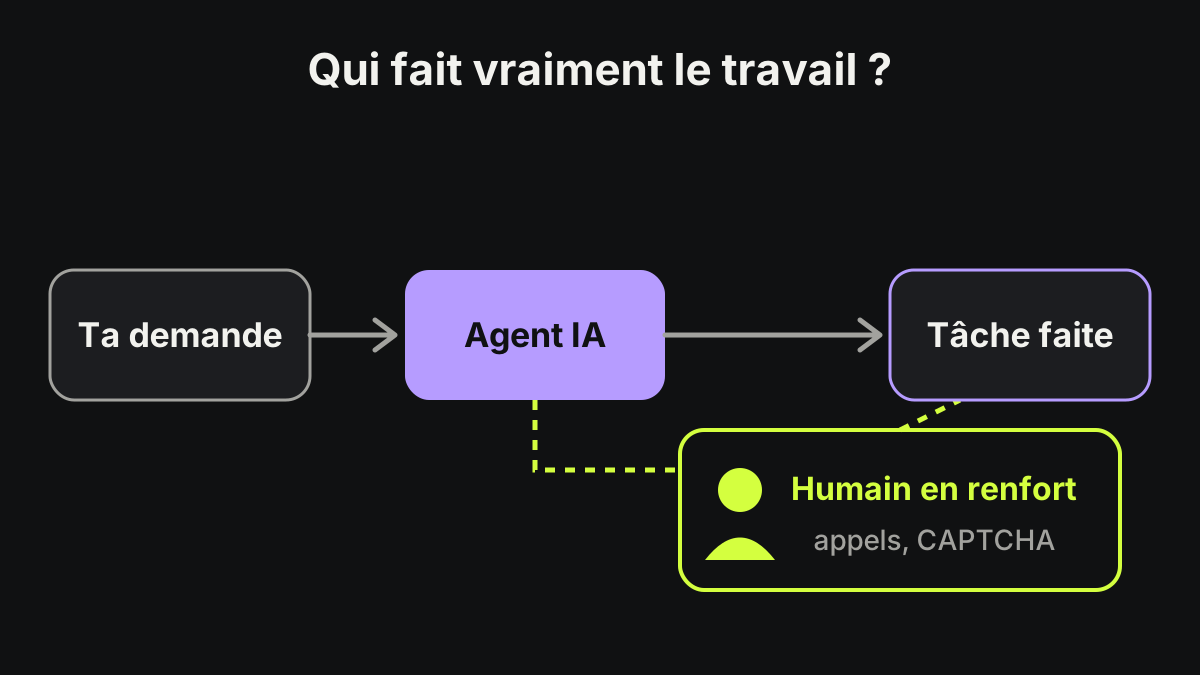
This isn't the first time we've seen the limits of agents. We've already covered how some AI agents still rely on humans behind the scenes.
So, what changes?
If you're in France, nothing changes right away: Muse launched in the US. But the question will come up here too as soon as this kind of agent is offered in Europe.
In the short term, over the coming months, expect agents that work on some sites and not on others, and you won't always know why. In the medium term, over two or three years, the most likely solution is a system of "verified agents," with a clear identity and rules on who is responsible when something goes wrong. Nobody has built it yet.
In the meantime, one simple habit: if you use an AI agent, only give it access to the accounts it really needs, and keep manual approval before any payment.
Translated with the help of AI from our French article, which is prepared with AI from the sources, then reviewed and approved by Valentin Fouilloud before publication. How we work