Daily brief, November 6: data centers, AI stock drop and Chooz
On November 6, data centers dominate the news: after the US midterm elections, they face massive pushback, and AI-related stocks have tumbled.
40 of 41 ballot measures against data centers
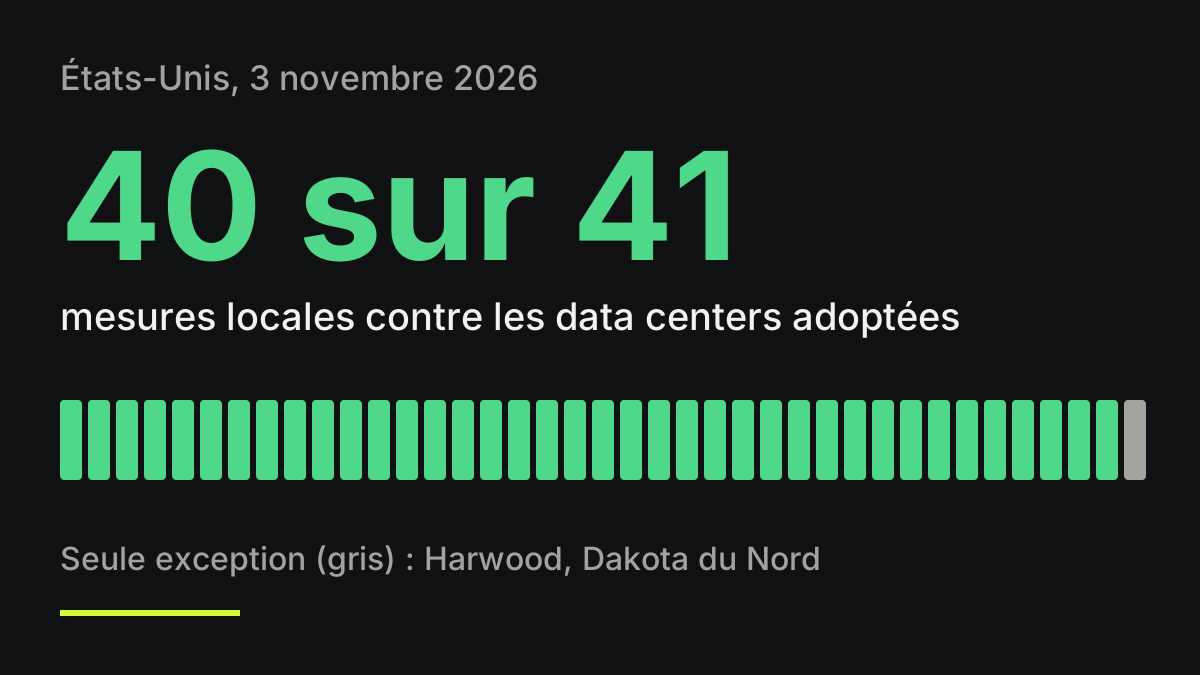
In the midterm elections on Tuesday, November 3, 41 measures related to data centers were put to a vote. In 40 cases, the majority voted for more restrictions on these projects. Data centers are the warehouses full of computers that run AI, and they use a lot of electricity and water. According to TechCrunch, even where they weren't on the ballot, they were a major campaign issue. For you, the concrete effect is simple: these projects could get harder to build, so AI services could grow more slowly. Source: TechCrunch
Nvidia loses 9.3% in a single trading day
On Thursday, November 5, Nvidia lost 9.3%, AMD 17.3% and Micron 17.5%. Neoclouds, the hosting companies that rent out chips specialized for AI, did even worse: Iren fell 17%, Nebius 15%. CNBC cites three causes: the election results, interest rates that are already high, and the question of whether massive AI spending will pay off. On Friday, tech stocks bounced back, but a Barclays analyst expects local opposition to will make these projects more expensive without stopping them. Source: CNBC
Anthropic heads for an IPO as AI spending stalls
According to Ramp, a company that tracks payments at thousands of businesses, spending on tokens (the price paid to use an AI, request by request) grew only 1.5% between August and September, even as usage volume kept rising. The median company spends between $12 and $15 per employee per month. Anthropic cut its prices sharply, which reduced its revenue growth by about $600 million, according to a company filing. Bloomberg reports that its potential valuation has dropped from $2,000 billion in early October to $1,200-1,300 billion. Source: TechCrunch
GPT-6 Cyber, reserved for approved researchers
On November 5, OpenAI announced GPT-6 Cyber, a version of its model trained to find security flaws, inspect code and write attack code. It is rated "critical" in OpenAI's safety framework, versus "high" for the previous version, which is why access is restricted to a small group of approved customers. It documented 81 previously unknown flaws in Firefox, rated high severity by Mozilla. Only verified researchers have access for now. Source: Blog du Modérateur
Chooz back online, second unit expected
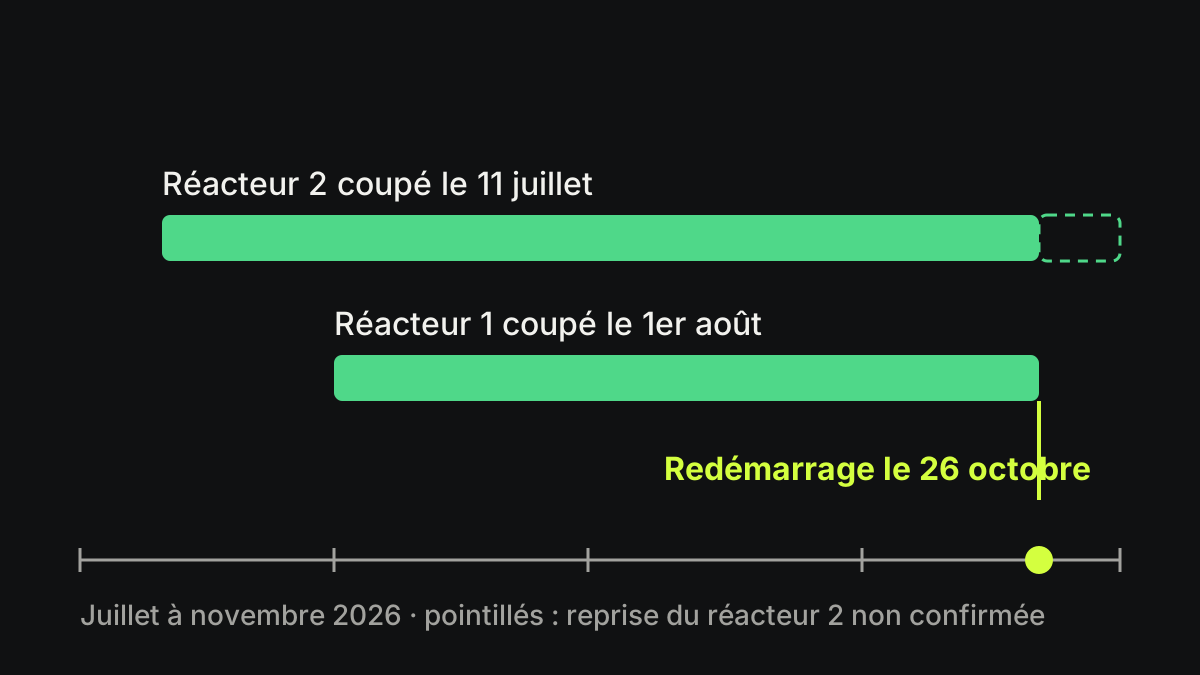
Unit 1 of the Chooz nuclear plant, in France's Ardennes region, with a capacity of 1,450 MWe, was restarted on October 26 after a shutdown caused by low water in the Meuse river, during a summer of drought and heat waves. The two units had shut down on July 11 and August 1. Unit 2 was due to restart "in the coming days," though the article doesn't confirm it. Power plants need water to cool their reactors: when the river drops, they have to cut output or shut down. Source: Révolution Énergétique
Translated with the help of AI from our French article, which is prepared with AI from the sources, then reviewed and approved by Valentin Fouilloud before publication. How we work