Data center water use: real problem or overblown controversy?
Verdict: Half true
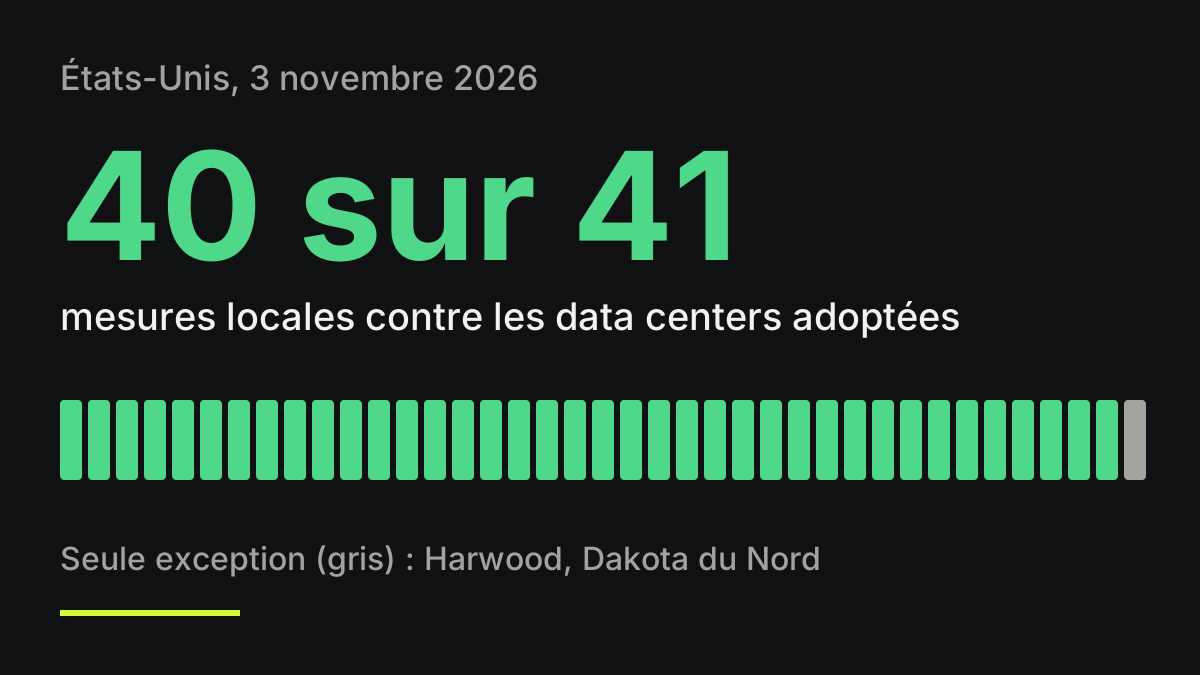
On November 3, 2026, American voters weighed in on 41 local measures that limited data centers. They adopted 40 of them. Water and electricity are the two big fears. But "a data center drinks millions of liters" is true… or false, depending on the cooling system.
Key takeaways
- On November 3, 2026, in 10 US states, 40 out of 41 local measures that slowed down data centers were adopted (a CNBC analysis based on Ballotpedia, a US election information site).
- A giant 1-gigawatt data center can use up to 10 million gallons of water a day (about 38 million liters), but only under certain conditions.
- "Closed-loop" cooling uses very little water. Evaporative cooling can lose a huge amount on heat wave days.
- We often don't know what each site uses: many companies only give an overall figure.
A very clear vote
In total, 41 measures were put to voters in 10 states. More than half (21) were in Ohio. The others were spread across California, Florida, Illinois, Kansas, Maine, New Jersey, Nevada and Wisconsin. Only one was an exception: in Harwood, North Dakota, voters rejected additional review of industrial projects, data centers included.
CNBC doesn't give the percentages for each vote. Also keep in mind: these are local votes, and their reach varies from one town to another. In a CNBC poll, 56% of voters said data centers had weighed heavily in their choice.
Water: how much, really?
Shaolei Ren, a researcher at the University of California, Riverside, estimates that a 1-gigawatt AI data center can use up to 10 million gallons of water a day. A US gallon is about 3.8 liters: that comes to around 38 million liters. At 150 liters per person per day, that's enough to cover the needs of more than 200,000 people. That calculation is ours, not CNBC's.
But this figure is a maximum. It all depends on the hardware, the location and the cooling.
Three ways to cool
- Closed-loop liquid: water circulates in a loop around the chips. AI chips need it, and this system uses very little water. An executive at Equinix, a data center operator, says water cools about 3,000 times better than air.
- Dry: almost no water, but more electricity, especially when it's hot.
- Evaporative: little electricity, but a lot of water lost on the hottest days.
Many sites mix these methods. Equinix's site in San Jose uses dry cooling when it's cool, and evaporative cooling when it's hot.
What the big names say
- Meta, Lebanon (Indiana), 1 GW: the company says the water recirculates and that it uses almost none most of the year. Yet its law firm mentions a permit for up to 8 million gallons a day in 2031. Meta replies that this would be a peak, reached "rarely."
- Colossus 1 in Memphis (SpaceX): a permit for 1.28 million gallons a day (about 4.8 million liters), not yet reached according to the local utility. A water recycling plant, promised at $80 million, has been on hold since April 2026.
At that last site, the gas turbines are also the target of lawsuits, as we explained in the xAI gas turbine lawsuit.
Why it's so hard to measure
Operators often publish the water used across all their sites, not site by site. Equinix, for example, doesn't break down its sites. Its total was 1.2 billion gallons in 2025, 10% more than in 2024. Without local figures, residents can't check what companies promise.
So, what changes?
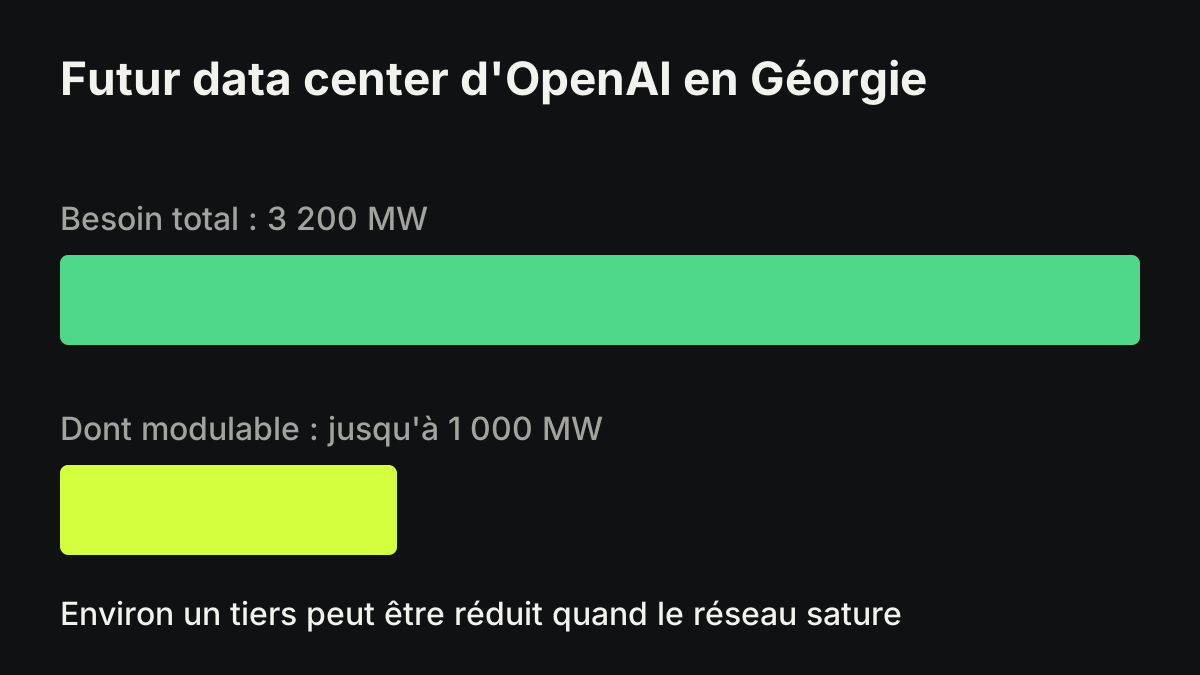
Verdict: half true. Yes, some data centers can use a huge amount of water, but not all of them, and not all the time. The real problem is the lack of transparency. It's also where pressure works: OpenAI promised to cut 1,000 MW from its data center in Georgia when the power grid is under strain, proof that local pressure can make companies budge.
These votes don't block everything: mostly, they make new projects harder in the towns involved. What to watch in the coming months: site-by-site data, and the local rules that will require it.
Translated with the help of AI from our French article, which is prepared with AI from the sources, then reviewed and approved by Valentin Fouilloud before publication. How we work