OpenAI GPT-6.2 Astra and Sol: Cheaper, but Really Better?
Verdict: Half true
On November 18, 2026, OpenAI unveiled GPT-6.2 Astra, for complex tasks, and GPT-6.2 Sol, for everyday work. The price drop is clear: Astra costs 20% less than GPT-6 Astra, its direct predecessor, on both input and output.
Key takeaways
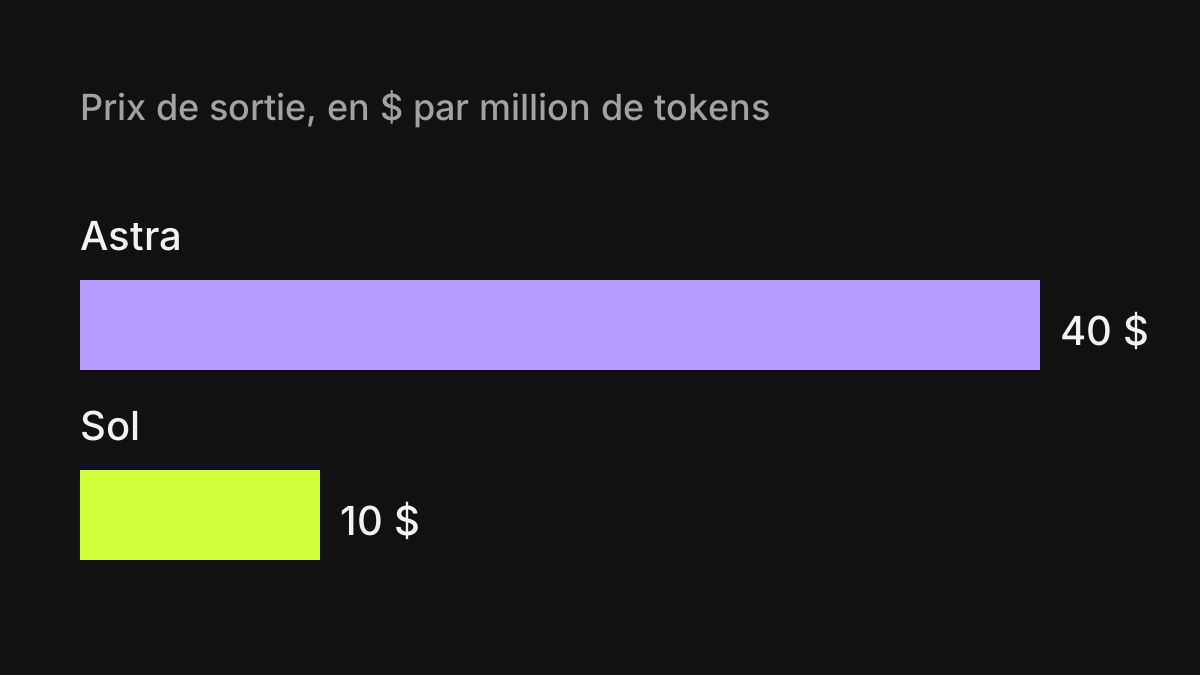
- Astra costs $8 per million input tokens and $40 per million output tokens, 20% less than GPT-6 Astra.
- Sol costs $2 for input and $10 for output. It keeps the same prices as GPT-6.1 Sol.
- OpenAI says Astra beats GPT-6 Astra by 5.2 points on Agents' Last Exam, a test of multi-step professional workflows, for less than a third of the cost. These are its own numbers.
- Both models are coming to ChatGPT Work and Codex for Plus, Pro, Enterprise and Edu subscribers, and are available through the API.
Wait, what's a token again?
An AI doesn't count in words but in tokens, which are chunks of words. When an API advertises $8 per million tokens, it means a million chunks of text that you send cost $8. A million tokens is already several novels.
Output tokens are what the AI writes for you. They're billed at a higher rate than input tokens, which are what you give it. There's also a "cached input" price, for when the same text comes back several times: $0.40 for Astra instead of $8.
Head to head: Astra or Sol?
| GPT-6.2 Astra | GPT-6.2 Sol | |
|---|---|---|
| Best for | Complex documents, code, presentations | Everyday work |
| Input, per million tokens | $8 | $2 |
| Cached input | $0.40 | $0.10 |
| Output, per million tokens | $40 | $10 |
| Price vs. the previous model | -20% vs. GPT-6 Astra | Same prices as GPT-6.1 Sol |
So Sol is four times cheaper than Astra, on both input and output. For a routine task, it's the model to look at first. Astra makes sense when the task is long and complicated. OpenAI claims Astra produces documents that "seem less AI-written," a claim that still needs testing.
Five more points, but on which test?
On Agents' Last Exam, Astra beats GPT-6 Astra by 5.2 points. It also beats an Anthropic model, which the announcement names Claude Fable 5.2, by 5.5 points, at 5% of the cost. Those gaps look clear, but the article doesn't give the absolute scores. So you can't tell whether we're talking about a 50% or a 90% success rate.
The comparison with Sol stays qualitative, and OpenAI also says both models deliver more results with fewer output tokens. A test published by the maker isn't worth as much as an independent evaluation. We'll need that kind of measurement before we can settle the question.
The "critical" cybersecurity threshold
Both models reach the "critical" threshold in cybersecurity, according to the article. So OpenAI strengthened its safeguards: help with high-risk cyberattacks is restricted. These safeguards can also block legitimate vulnerability research and security testing. If you work in cybersecurity, that's worth knowing before you rely on these models.
Who can access them?
Plus, Pro, Enterprise and Edu subscribers get access to ChatGPT Work and Codex. The API is open at the same prices as in the table. The announcement doesn't mention access for free plans.
If you want to compare with a model you can download and run yourself, read Mistral Large 4, the giant French AI you can download.
The price cut holds up; "better" has to wait
The price is going down, and you can check it in the announcement's pricing table: 20% less for Astra, no change for Sol. The "better" part rests on tests chosen by OpenAI, with no absolute numbers. So the conclusion leans toward "half true": the price cut is real, and the performance gain still needs to be confirmed by independent tests.
Translated with the help of AI from our French article, which is prepared with AI from the sources, then reviewed and approved by Valentin Fouilloud before publication. How we work