ChatGPT Wallet: OpenAI's AI agents can now pay for your purchases
Since November 13, 2026, ChatGPT can pull out your card for you, or almost. OpenAI launched ChatGPT Wallet, a wallet that lets its AI agents, called "dots," place orders and pay a merchant. It's limited to adult ChatGPT Pro subscribers who live in the United States and use a Visa, Mastercard or American Express card issued there.
Key takeaways
- Every purchase has to be approved with a verification like Face ID or a fingerprint.
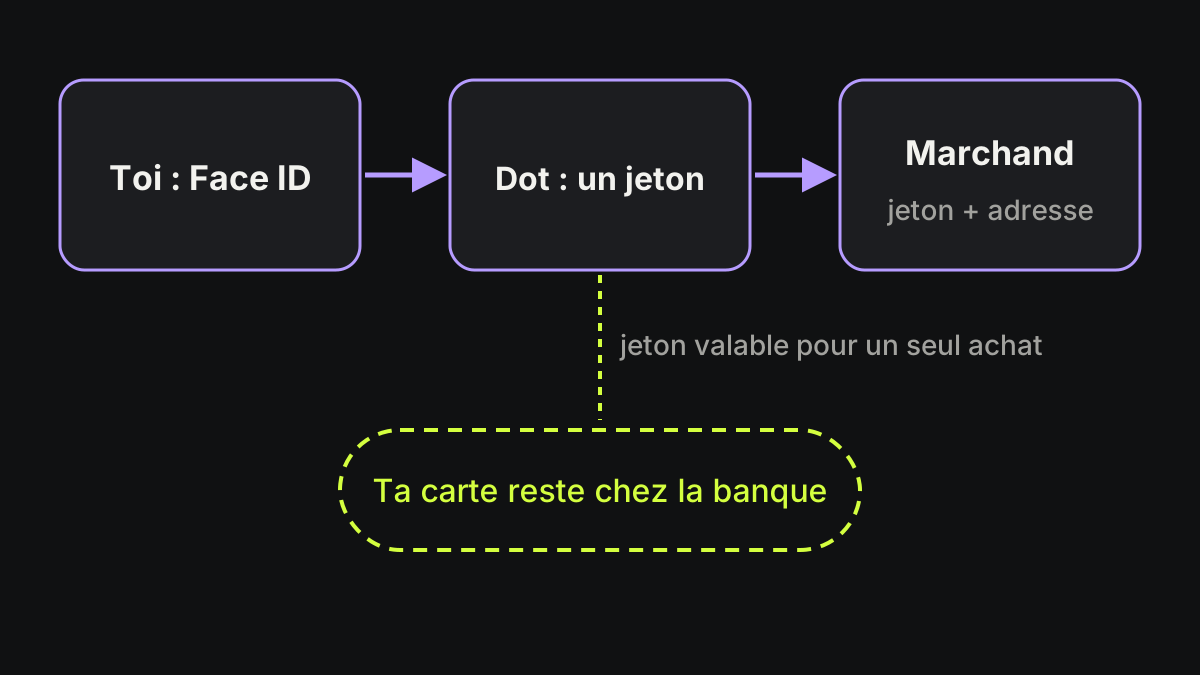
- The agent and the merchant never see your card number: the payment goes through a token unique to each purchase.
- There's no spending limit yet, and OpenAI takes no commission on sales.
- Nothing has been announced for France or Europe.
What is ChatGPT Wallet?
It's a space in ChatGPT where you save your payment card once and for all, so OpenAI's agents can use it when you ask them to buy something. The "dots" were introduced in late September at OpenAI's developer conference: they're assistants that can take actions on websites for you, instead of just answering you. Until now, they could search for and compare products. With the Wallet, they go all the way to checkout.
Buying with a dot, step by step
Here's how OpenAI describes the process, according to TechCrunch:
- You add your card to ChatGPT Wallet, just once.
- You ask your dot to help you buy something, for example a pair of running shoes in your size. It helps you choose.
- Before payment, it shows the cart, the total and the card that will be charged.
- You confirm with Face ID or your fingerprint. This confirmation leaves a record of the transaction.
- The Wallet charges the card using a payment token.
- The dot sends the merchant what it needs to ship the order: your address and contact details.
You keep your card's usual perks, like reward points and the right to dispute a charge with your bank.
The payment token: why doesn't the merchant see your card?
Because it never gets the real number. The payment network (Visa, Mastercard or American Express) creates a stand-in code that's valid for that transaction only. Think of it like a coat check ticket: it gets your coat back that night, but it's useless to someone who steals it the next day. It's the same technique Apple Pay and Google Pay already use when you pay with your phone.
On that front, the system holds up. A hacked agent or a dishonest site doesn't get anything it could use to drain your account.
No spending limit at launch
The weak spot lies elsewhere. At launch, there's no way to set a maximum amount or block certain categories of purchases. OpenAI promises to add spending caps, allowed categories and time limits, and then to let the agent make some purchases without approval each time. When that happens, the question of trusting its product choices will get a lot more serious.
There's also the question of where these agents will be able to shop. TechCrunch doesn't name any partner merchants, and several stores block AI agents, starting with Amazon, which pushes its own assistant, Alexa. We explained why merchants are blocking Meta's Muse agent. OpenAI has already had one false start: its built-in "Instant Checkout" payment, launched in fall 2025, was quickly shelved in favor of a tool that only compared products.
Why does OpenAI care so much about payments?
Because that's where the money is. ChatGPT has more than 1.2 billion weekly users and nearly 100 million paying subscribers, according to CNBC. OpenAI says it takes no cut of transactions today, but acknowledges these purchases could become a source of revenue. A small commission on millions of orders would add up fast.
Whether people actually use it is still unproven. On November 4, Uber announced it had received only 4 rides booked by AI agents during its busiest week. American Express, a launch partner, told CNBC it prefers to start in a limited setting to watch what happens. No date has been given for a launch outside the United States.
Translated with the help of AI from our French article, which is prepared with AI from the sources, then reviewed and approved by Valentin Fouilloud before publication. How we work