ChatGPT at 20% of Google's searches? What that number is worth
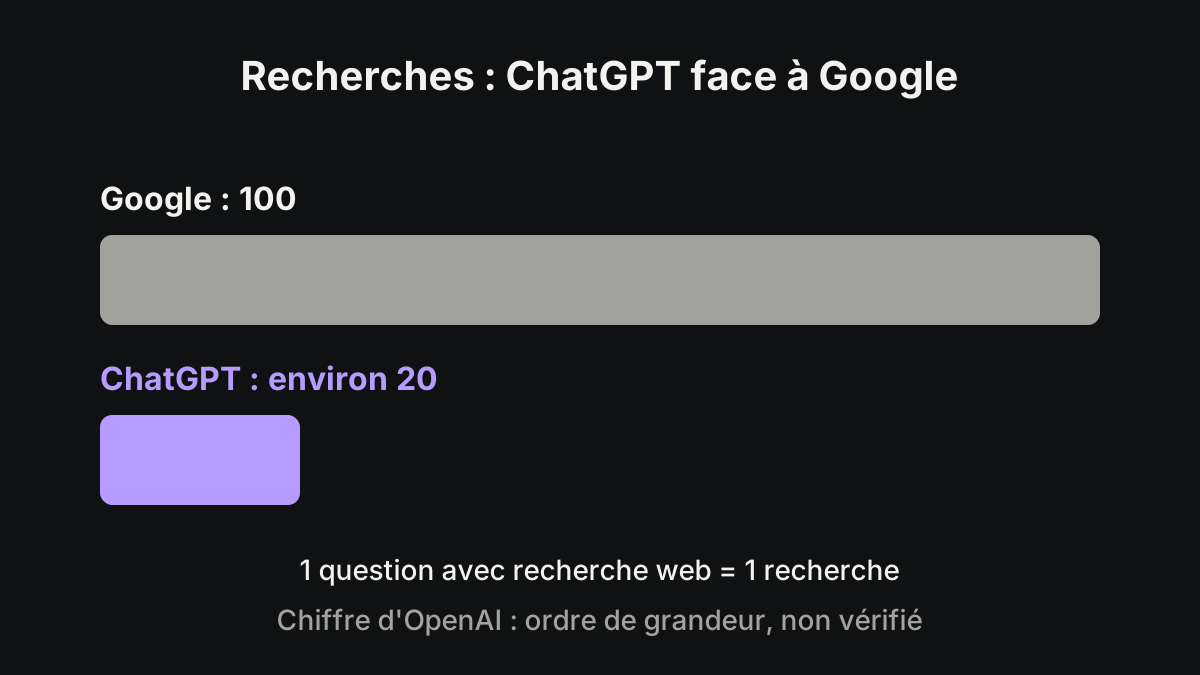
Is "Ask Chat" replacing "Google it"? In early November 2026, OpenAI put out a number that got people talking: the number of searches done through ChatGPT supposedly equals about 20% of Google's. Take it as a rough estimate given by the company itself, not as a market share.
Key takeaways
- The number comes from Adam Fry, ChatGPT product lead at OpenAI, at an event in New York (reported on November 3).
- According to OpenAI, every question that triggers a web search counts as a search, even several times in the same conversation.
- The time periods and regions being compared aren't specified: there's no way to check the number from the outside.
- "20% of the volume" doesn't mean "20% of the search market."
- What really changes: you now have two go-to options, and each has its limits.
What OpenAI actually said
Adam Fry said the volume of search queries going through ChatGPT has reached the equivalent of 20% of Google's volume. He was speaking in an interview with Alex Kantrowitz, of the Big Technology newsletter. ChatGPT Search has been around for about two years.
To put that in perspective: Google said in 2025 that it handles more than 5,000 billion searches a year. If you naively apply 20%, you'd get about 1,000 billion a year, or a little under 3 billion a day. Heads up: that's my own illustration, because OpenAI doesn't specify the period or the scope of its number, and Google's volume may have changed since.
Why you should take it with a grain of salt
A number nobody can verify. OpenAI is doing the counting, with its own method. No independent organization has published a comparable measurement, based on what the source articles say.
An in-house definition. A "search" on ChatGPT is a question that triggers a web search. On Google, a search is a query typed into the search bar. The two aren't necessarily comparable: a conversation with ten questions counts ten times in OpenAI's math.
Volume isn't market share. Lots of people use both. ChatGPT being 20% of Google's volume doesn't tell you how many people have stopped using Google.
A number from the company itself. OpenAI has every reason to show that its products are replacing traditional search: it's a selling point for its users and its investors. That doesn't mean it's false, just that we need outside measurements.
So, what changes for you?
Something real is happening: asking an AI a question instead of scrolling through ten links has become a habit for a lot of people. But the two tools don't do the same job.
- A chatbot is handy for a quick summary answer, an explanation or a comparison. It can make mistakes or get the summary wrong.
- A traditional search engine is still useful for finding a specific site, checking a source or comparing several opinions.
The smart move: on a topic that matters (health, money, paperwork, school), open the source instead of relying on the summary alone. That goes for AI as much as for any search engine.
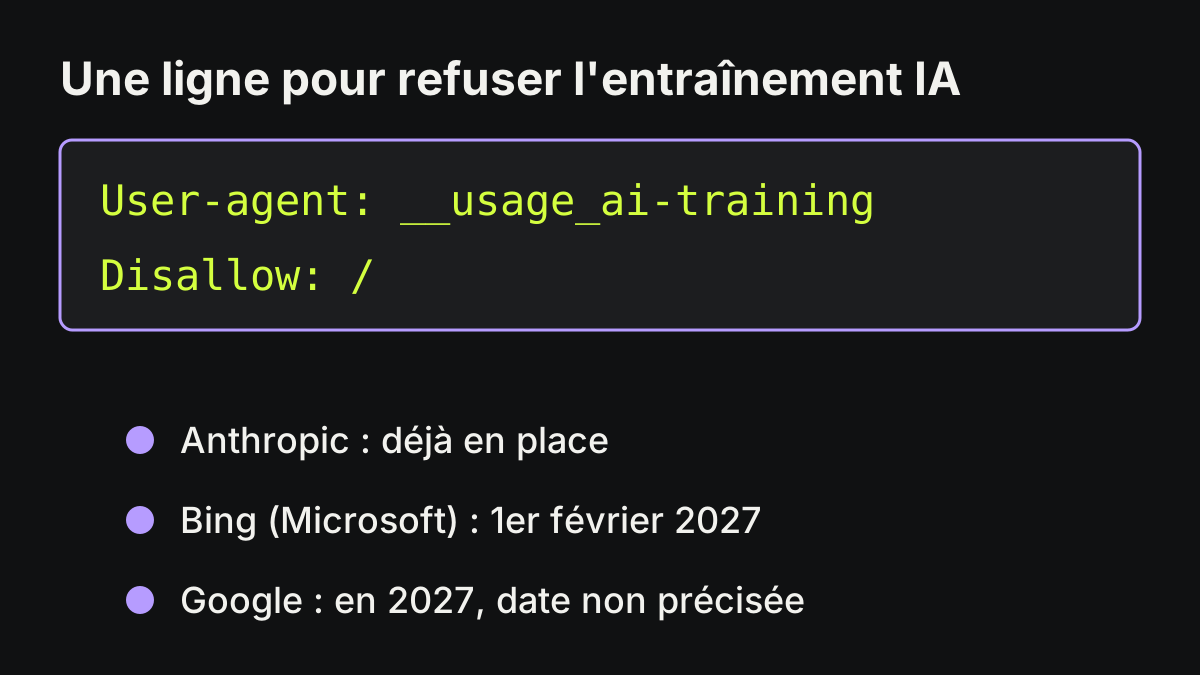
Websites have something at stake too: if people read summaries instead of clicking, publishers lose traffic. That's one of the reasons behind the shared robots.txt rule for opting out of AI training, and the growing number of complaints from news publishers.
Verdict: true, but incomplete
Using AI to search is on the rise, that's for sure. The exact 20% number, though, is just a claim from OpenAI, with a counting method of its own. We're waiting for independent measurements before talking about ChatGPT "catching up."
Translated with the help of AI from our French article, which is prepared with AI from the sources, then reviewed and approved by Valentin Fouilloud before publication. How we work