SpaceX tower catches Starship upper stage for the first time
Verdict: True
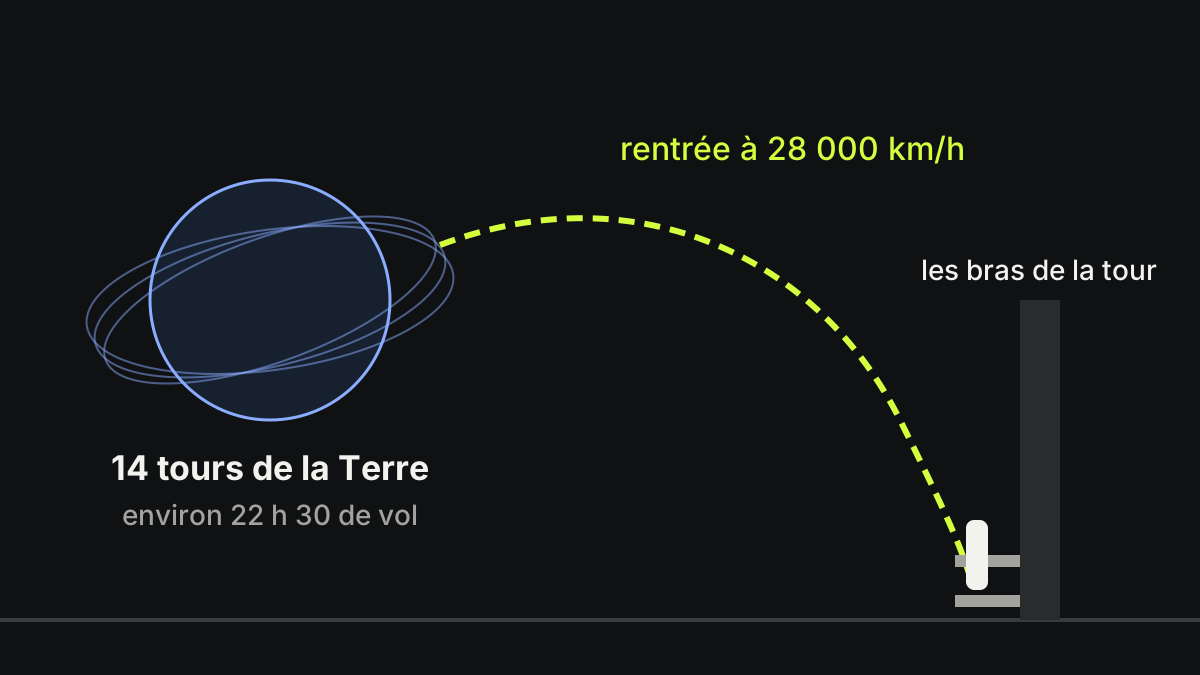
On Saturday, November 14, 2026, in Texas, the two arms of SpaceX's launch tower closed around the Starship spacecraft as it returned from space after about 22 and a half hours of flight and 14 laps of Earth. It was the first time a rocket's upper stage coming back from orbit had been recovered this way. The first stage wasn't caught on this flight.
Key takeaways
- On this 15th test flight, the ship deployed 26 third-generation Starlink satellites.
- It reentered the atmosphere at about 28,000 km/h, then the tower caught it a few meters above the ground.
- The Super Heavy booster was diverted toward the Gulf of Mexico, where it exploded.
- The goal is a rocket that's reusable like an airplane, and SpaceX now has to prove it can fly this ship again quickly.
What exactly is Starship?
It's SpaceX's biggest rocket, made of two parts stacked on top of each other. At the bottom, the Super Heavy booster provides most of the thrust at liftoff, then separates after a few minutes. On top, the ship, also called Starship, continues on to orbit with its cargo. The tower that catches them has been nicknamed Mechazilla, and its arms "the chopsticks."
Super Heavy or the ship: which is harder to catch?
The ship, by far. The booster had already been caught by the tower, for the first time in October 2024. The ship comes back from much higher up, and much faster.
| Super Heavy booster | Starship spacecraft | |
|---|---|---|
| Role | Push the rocket at liftoff | Climb to orbit with the payload |
| Where it comes back from | A few minutes of flight, without circling Earth | Orbit, after 14 laps on this flight |
| Speed at the start of the return | Much lower | About 28,000 km/h |
| Protection | No comparable heat shield | Thousands of tiles that absorb the heat of reentry |
| Result on Flight 15 | Diverted toward the sea, it exploded | Caught by the tower |
At 28,000 km/h, the ship would get from Paris to Marseille, in the south of France, in less than two minutes. As it crosses the atmosphere, it slows down by turning sideways, steered by its movable flaps, like a skydiver spreading out flat. Just before it arrives, it relights its engines to flip upright and brake, then slots itself between the tower's arms.
Why wasn't Super Heavy caught?
Its navigation system detected that the conditions for a catch weren't met, according to Techno-Science, a French science news site. When that happens, the plan is to send it over the Gulf of Mexico, far from the tower, so it can't damage it. It exploded before reaching the water, according to CNBC. This flight was also the first in which SpaceX tried to catch both stages.
Was the giant US flight outage caused by Starship?
No. On launch day, Friday, November 13, the FAA, the US civil aviation authority, did ground flights nationwide, but because of a telecommunications outage unrelated to the rocket. The only real effect of the launch on air traffic happened farther west: Hawaii suspended a few flights to the West Coast because of the risk of debris. Both measures have since been lifted.
Why make a rocket reusable?
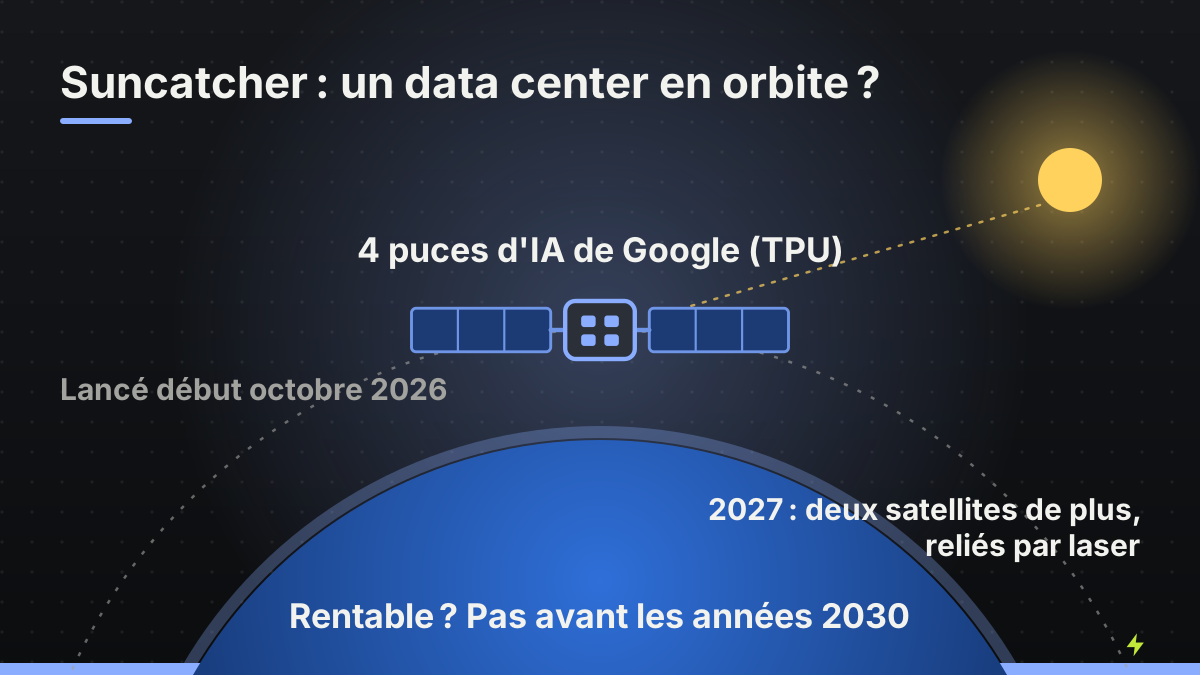
To bring down the price of a launch. Today, most rockets lose at least one stage on every flight, a bit like throwing away half an airplane after each trip. SpaceX wants a ship that can be refurbished quickly, with as little work as possible. Several projects depend on it: Google, for example, estimates that its data centers in space will only pay off if launch prices drop below $200 per kilogram.
Starlink, SpaceX's satellite internet network, already has more than 11,000 satellites and remains the company's cash cow, according to CNBC. NASA, meanwhile, is counting on Starship to carry astronauts and equipment between lunar orbit and the Moon's surface.
Our call: catching the ship is indeed a first, and a real step toward a fully reusable rocket. Next, this ship has to fly again, and no date has been set for that yet. A Starship can carry up to 60 third-generation Starlink satellites, according to SpaceX: this flight deployed 26.
Translated with the help of AI from our French article, which is prepared with AI from the sources, then reviewed and approved by Valentin Fouilloud before publication. How we work