Why AI is driving up RAM prices, and what it means for your PC
If you've looked at the price of a RAM stick or a laptop this year, it probably came as a shock. Memory has become one of the most fought-over components on the planet, and it's not because of gamers: AI data centers are sucking it up. OpenAI's CEO, Sam Altman, even said this week that it would be better off in his servers than in your computer.
Key takeaways
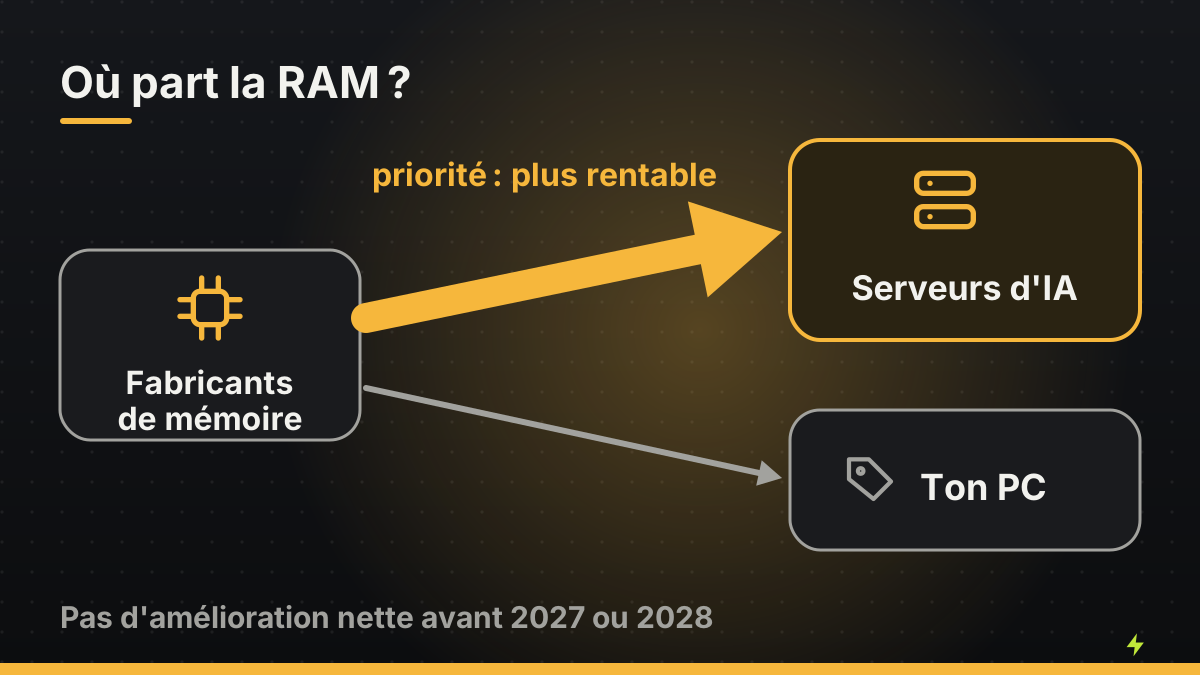
- RAM (working memory) has been in short supply everywhere since late 2025, because manufacturers prioritize AI servers, which are more profitable.
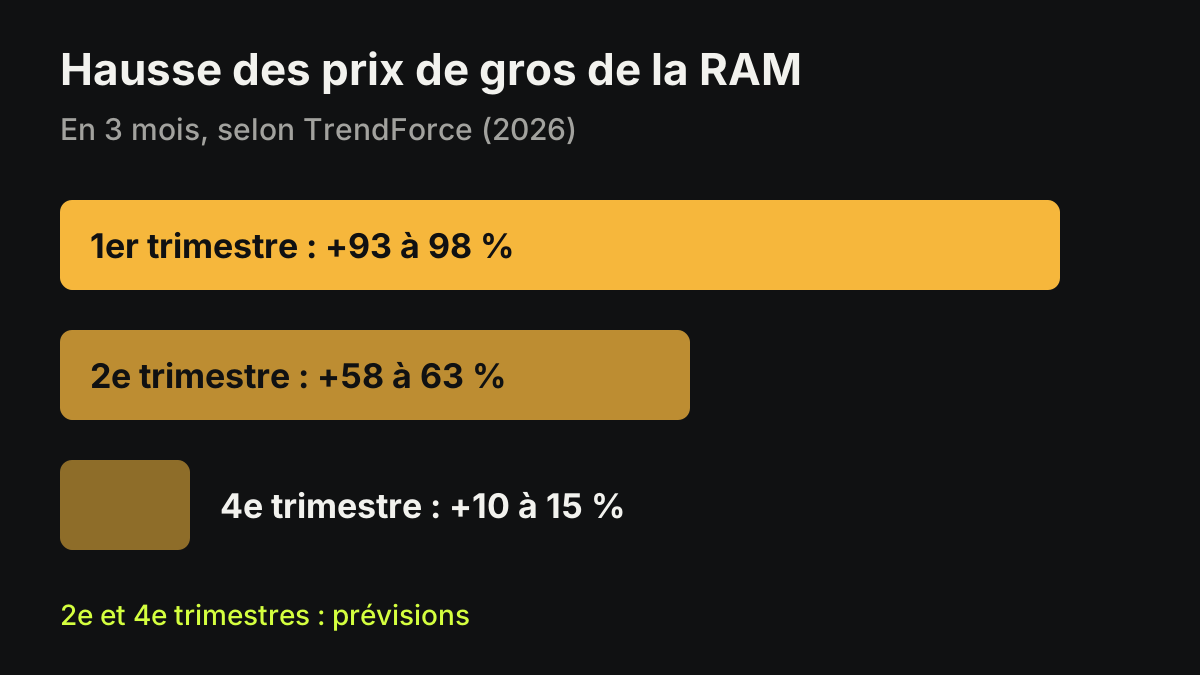
- According to the research firm TrendForce, the price of PC memory more than doubled in a single quarter in early 2026, a record.
- The result: PCs cost more, and Intel and Microsoft are seeing their PC-related sales drop.
- Sam Altman said on October 29 that he found it "quite terrible" that memory sits idle in personal computers.
- The big winners are the memory makers. No clear improvement is expected before 2027 or 2028.
What RAM is and why AI loves it
RAM is your computer's working memory: the space where it puts whatever it's using right now, like your desk when you do homework. The bigger the desk, the more stuff you can spread out at once.
AI models like ChatGPT or Claude are gigantic, and they have to be kept entirely in memory to respond quickly. A single AI server packs huge amounts of memory, including an ultra-fast, very expensive version called HBM, stacked right next to the computing chips.
But there are only three major manufacturers of this memory in the world: Samsung, SK Hynix and Micron. Their factories are running flat out, and every silicon wafer used to make memory for AI servers is one less for PCs, smartphones or consoles. Micron even dropped its consumer brand Crucial to focus on data center customers.
Prices went through the roof
The numbers are dizzying. In February 2026, TrendForce, a Taiwanese firm that tracks this market, predicted a 90 to 95% increase in the first quarter for the price of standard memory sold to manufacturers, and more than 100% for PC memory. In other words, prices doubling in three months. The firm called it the biggest quarterly increase ever seen. And it was still forecasting steep increases for the spring.
These prices apply to contracts between memory makers and PC brands. But they inevitably end up on the price tag you see in stores.
Who's paying the bill
The first to get hit are the companies selling PCs. On October 30, Intel's stock lost about 28% in a single day. Its CEO, Lip-Bu Tan, explained that customers were reporting a slowdown in PC sales "because of the price and availability of memory," and that the price of machines had already risen sharply since the start of the year. Intel's CFO expects the slowdown to last at least until mid-2027.
At Microsoft, revenue from Windows licenses sold with new PCs and from its devices fell 22% last quarter. Fewer PCs sold means fewer copies of Windows installed.
And at the end of the chain, there's you: a laptop for school, a graphics card, a smartphone or a console can cost more, or ship with less memory for the same price.
Who's making money
Memory makers are living through a golden age. Micron says more than three quarters of its shipments for the year are already booked, and is aiming for about $61.5 billion in revenue in a single quarter.
Sam Altman summed it up his own way on the Cheeky Pint podcast, released on October 29. According to him, these manufacturers spent years on the brink of bankruptcy from building too many factories, and they're now each going to generate something like $100 billion in cash per year. That's his own estimate, not an official figure.
The Sam Altman line that made people angry
On that same podcast, Altman said it was "quite terrible" that everyone keeps part of the world's already scarce memory in their own computer. His argument: a PC supposedly only really uses its memory about 5% of the time, while in a data center it runs nonstop.
Before you get mad, put it in context: - That 5% figure isn't backed by any study: he threw it out without a source. - He didn't announce any project to take your RAM. He was thinking out loud, not laying out a plan. - He has a direct interest: OpenAI is one of the biggest memory buyers in the world. Less demand from regular people means more chips for him. - And his vision goes against the whole industry, which is instead pushing "AI PCs" that can run models locally, without sending your data to the cloud.
Behind the provocation, there's a real question: do we want a world where everything runs on servers we rent, or do we keep machines that work without a connection? Both have advantages, but the choice shouldn't be left to cloud providers alone.
So, what changes?
In practice: if you need new gear, expect to pay more than a year ago for the same amount of memory. This isn't buying advice, just the reality of the market right now.
Looking ahead, don't count on a quick return to normal. Building a memory factory takes several years, and according to TrendForce, new capacity won't arrive in volume before late 2027 or 2028. Until then, everything depends on the data center race: if the AI giants slow their spending, as some investors are starting to demand, the pressure on prices could ease sooner. But for now, nobody's taking their foot off the gas.
Translated with the help of AI from our French article, which is prepared with AI from the sources, then reviewed and approved by Valentin Fouilloud before publication. How we work